Tyler Deaf and Hard of Hearing Center connects services, advocacy and connection across East Texas
Published 5:30 am Tuesday, March 10, 2026

Editor’s Note: This is one of the stories published in the March/April 2026 issue of ETX View Magazine, a product of the Tyler Morning Telegraph and Longview News-Journal. More stories will be posted in the coming days. To read the full digital flipbook, visit etxview.com .
“Deaf people can do anything — except hear.”
For people who are Deaf and hard of hearing in East Texas, the phrase is not aspirational. It is practical. Daily life is shaped by sign language, captioning, technology, and creative problem-solving that make communication possible and sustain a culture built on resilience, connection, and autonomy.
“People think deaf people can’t work or get by in this world, and that’s just not true,” said Susie Grona, president of the Tyler Deaf and Hard of Hearing Center’s board of directors.
That perspective is at the heart of the Tyler Deaf and Hard of Hearing Center, a nonprofit organization created not for the Deaf community, but by it.
Founded in 2012, the Tyler Deaf and Hard of Hearing Center (TDHHC) grew out of conversations among members of the local Deaf community who recognized a need for a centralized space – a place where services, advocacy, and connection could exist under one roof. The idea took shape after members of the community voiced their support at an East Texas Deaf Celebration event, where organizers asked a simple question: Would a Deaf center matter?
The answer was an emphatic yes.
From there, community members worked together to establish the organization as a nonprofit, create bylaws, and begin offering services, initially operating out of a small office at Tyler Junior College’s West campus. In its earliest days, the center relied heavily on volunteers and minimal funding, with just one person managing everything from interpreter coordination to day-to-day operations.
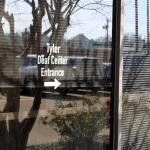
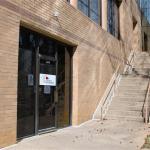
More than a decade later, TDHHC has grown into a regional hub serving individuals across 24 East Texas counties. The organization now offers interpreter services, American Sign Language (ASL) classes, senior programs, youth activities, literacy initiatives, and community events – all guided by leadership that includes people who are deaf and hard of hearing themselves, as well as those who are deaf-blind. The center is located at 1828 E SE Loop 323, Suite LL14, in Tyler, with Alana Husband serving as the executive director.
“Our center exists because the community wanted it,” Grona said. “It came from their passion and their desire to see something built that truly reflected their needs.”
As a nonprofit organization, TDHHC relies on grants, donations, and other necessary support to provide services for the community in East Texas. Beyond funding, the center relies on community feedback to identify service gaps and improve accessibility for both deaf and hard-of-hearing individuals.
The center’s mission is bolstered by a strong partnership with Tyler Junior College.
“The synergy between these two organizations is just remarkable,” said Scott Whitney, vice president of the TDHHC board.
“It is a beautiful relationship,” Grona added. “We’ve had a fishing day in Hideaway, and we have that every year, where we bring everybody fishing, it’s just so fun. It’s a great partnership.”
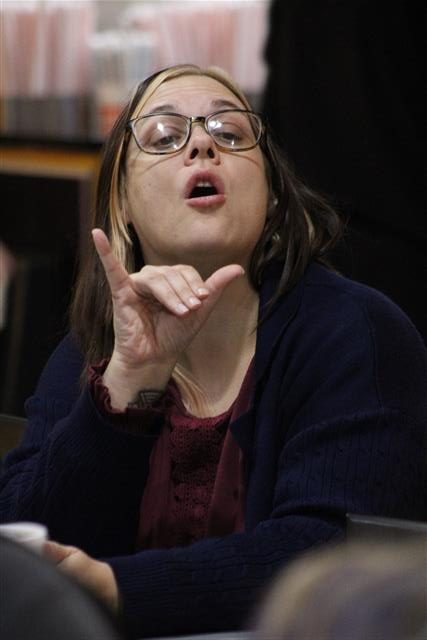
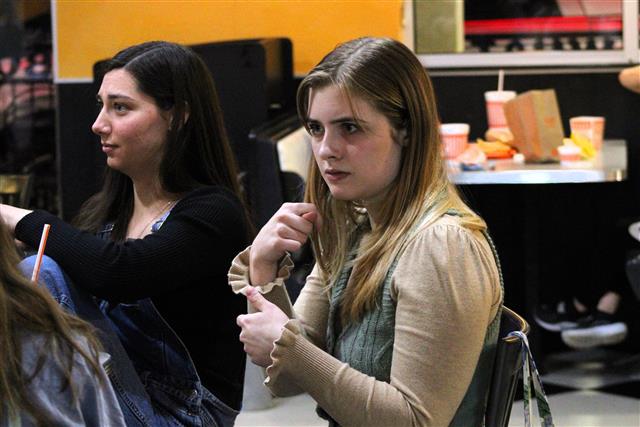
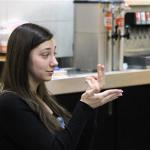
Andrea Short, interpreter coordinator for the Tyler Deaf and Hard of Hearing Center, uses American Sign Language (ASL) to communicate during a Lindale Deaf Chat event in January. (Jennifer Scott/ETX View)
Bridging access and community
Interpreter services remain the cornerstone of the center’s work. Requests are received daily, ranging from medical appointments and legal matters to workplace meetings and community events. While technology has expanded in recent years, leadership at TDHHS emphases that access does not automatically mean equality.
Captioning, for example, while helpful, cannot replace human interpretation.
“Captions are words on a screen,” Grona said. “With an interpreter, you get emotion, tone, context, and clarification. You get the full message, not just text.”
As an ASL professor at Tyler Junior College, Whitney added that automatic captioning often falls short, particularly in fast-paced or emotionally charged situations.
“You either get the words or you get the person,” he said. “With captioning alone, you don’t always get both.”
That distinction has become increasingly relevant as public institutions, media outlets, and outline platforms lean more heavily on automated accessibility tools. AI-generated captions often struggle with accuracy, particularly in captioning tone, emotion, and overlapping speech, leaving gaps in understanding for those who depend on them.
While progress has been made, advocates still say there is still a need for greater understanding of what true access looks like – especially for those whose go-to is ASL.
“I think captions are wonderful, but there’s no emotion there – it’s just words,” Grona said. “With an interpreter you get the emotions that are involved, the intonation, the surrounding noise, all of that information you’re going to get from an interpreter. You’re not going to get from technology.”
ASL as a language
Part of TDHHC’s mission involves education by helping the broader community understand Deaf culture. ASL, for example, is not just simply dramatic and dazzling hand movements. It is a complete language with its own grammar, structure, and regional variation. The distinction matters, particularly as interest in learning sign language grows.
“There’s nothing wrong with wanting to learn,” Grona said. “But it’s important to learn respectfully and from the community.”
Much of the Deaf community caution against using ASL as a novelty or aesthetic trend, especially on social media platforms where hearing creators have presented themselves as authorities on the language.
“That feels like a form of cultural theft,” he said. “Learning a language means engaging with the people who live it.”
The center offers ASL classes taught by deaf instructors, emphasizing both linguistic accuracy and cultural context. Leadership encourages the students to spend time within the Deaf community, where learning continues beyond the classroom.
“Everything you put into learning, practicing, and socializing will benefit your understanding,” Whitney said. “It’s a benefit for both the students and the Deaf community. The more you learn, the greater the impact you’ll have on others. It’s really worth it.”
“It’s like a domino effect,” Grona added. “It starts in one place, and it ends somewhere very different. It’s an amazing effect.”
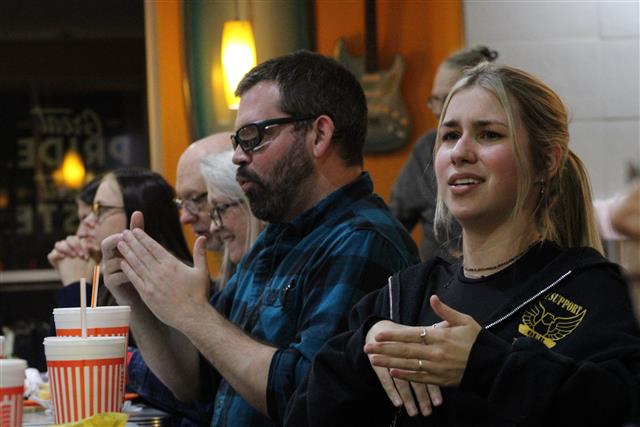
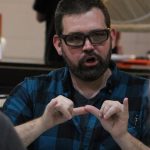
ASL is a vibrant, visual language where facial expressions and body movements are essential for communication. (Jennifer Scott/ETX View)
Hearing loss as a spectrum
Some individuals experience hearing loss later in life and may not feel immediately connected to Deaf culture. Others prefer the term “hard of hearing” rather than “deaf.” TDHHS aims to serve both populations while respecting individual identity.
“Deaf doesn’t mean all hearing loss… it can mean mild to profound,” Grona said. “There’s a whole spectrum… maybe someone has lost just a little bit of hearing and there are people who can’t hear anything at all.”
However, the term organization firmly rejects is “hearing impaired.”
“Hate it, hate it,” Grona said. “That’s not what we use… Deaf is not a bad word to use. They thought that hearing impaired was a little bit more formal and acceptable, but absolutely not, no.”
Whitney explained that terms like “hearing impaired” were created by those outside the Deaf and hard of hearing community, rather than by the community itself, noting that such labels don’t reflect the perspective or identity of the people they describe.
“It’s almost like Latinx – a word that somebody not involved in that culture just made up,” Whitney said. “It’s the same for us.”
Just as terms like “hearing impaired” can distort the perspective of the community, the difference between “Deaf” and “deaf” matters when it comes to identity as well. Capital D “Deaf” refers to people who use ASL and share in Deaf culture, while lowercase d “deaf” describes hearing loss without implying cultural connection.
Beyond the stereotypes
Grona, who is profoundly deaf, describes her world as largely centered around people who sign. Within her space, communication flows naturally. Outside of it, adaptability becomes essential – often relying on writing, phones, or interpreters.
“One of the biggest barriers is still communication with people who don’t know how to sign,” she said. “But sometimes I forget I’m deaf. I just move through the world.”
For Whitney, his hearing loss was discovered around age five. He was mainstreamed in school, positioned in front of the classroom to lipread and provided hearing aids – but not interpreting services. He went on to pursue a master’s degree and eventually found his way into deaf education.
“I don’t have any idea if I was born with a hearing loss or if that was something that happened later,” Whitney said. “…but with degenerative deafness, (my hearing) became worse.”
For much of the Deaf and hard-of-hearing community, technology has come a long way. From vibrating alarm watches, flashing doorbells, real-time transcription apps, and captioning glasses, independence has included safety.
However, Whitney points out that technology works best in controlled, one-on-one situations – not in crowded rooms where conversations overlap, and context matters.
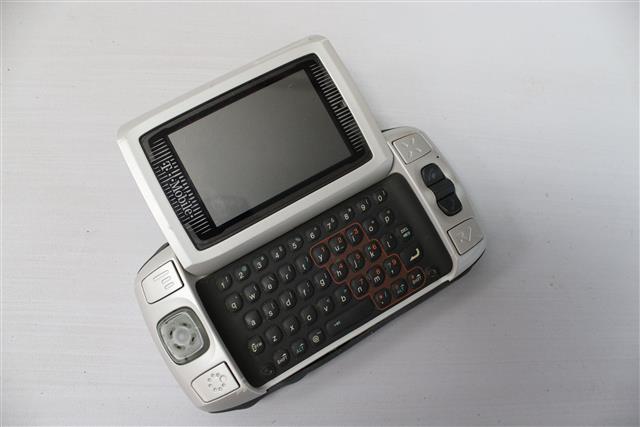
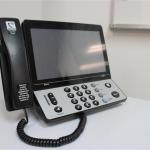
Independence for the Deaf and hard of hearing community is often supported by specialized technology, such as mobile devices with full keyboards that facilitate easier text-based communication. (Jennifer Scott/ETX View)
“We need more to accommodate what our needs are,” he added.
Within the Deaf community, discussions of such accommodations might include hearing aids; however, many decline the use of the devices, seeing their deafness as an integral part of their identity rather than a condition that needs “fixing.”
“I do believe, though, that people who aren’t deaf need to understand that being able to hear doesn’t make us equal,” Whitney said. “Things like cochlear implants aren’t a cure for hearing loss.”
Misconceptions about hearing loss can also contribute to isolation, particularly for those who fall between the hearing and Deaf worlds. Without shared language or consistent access, everyday interactions – from family gatherings to workplace conversations – can become exhausting or exclusionary.
“At a recent family Christmas, I could read what was going on, yet with all the conversations happening at once, I was completely lost,” Whitney said.
“My baby sister can sign, and she’s always been the interpreter for me. She doesn’t have to, but it’s her way,” Grona said. “At a family reunion, if I’m going, she wants to go too — because if I don’t have my sister, I’m not going; I’d just be twiddling my thumbs. I can say, ‘Hi, how are you?’ ‘Fine, OK,’ and then we go our separate ways. That’s the most we can do. That’s my barrier with my own hearing family members.”
Two worlds together
The Deaf and hard-of-hearing community in East Texas thrives through connection, culture, and creativity. From classrooms to family gatherings, technology to ASL, each adaptation reflects a commitment not just to communicate but to belong.
“The center is a bridge,” Whitney said. “We’re here to partner between those two worlds and bring them together.”
To find out more information or to contribute to TDHHC, visit tdhhc.org.
-
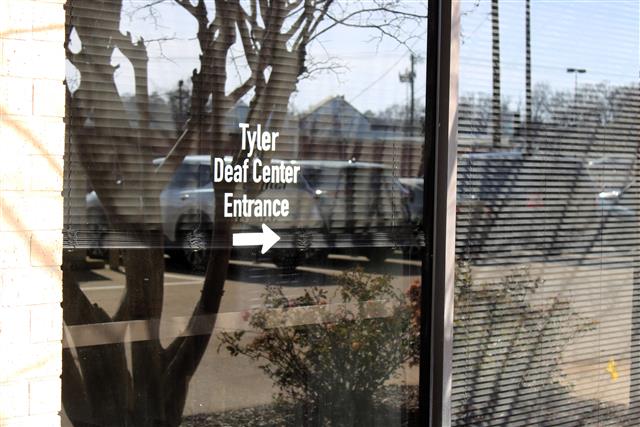
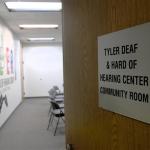
- The entrance to the Tyler Deaf and Hard of Hearing Center, located at 1828 ESE Loop 323, Suite LL-14 in Tyler.
-
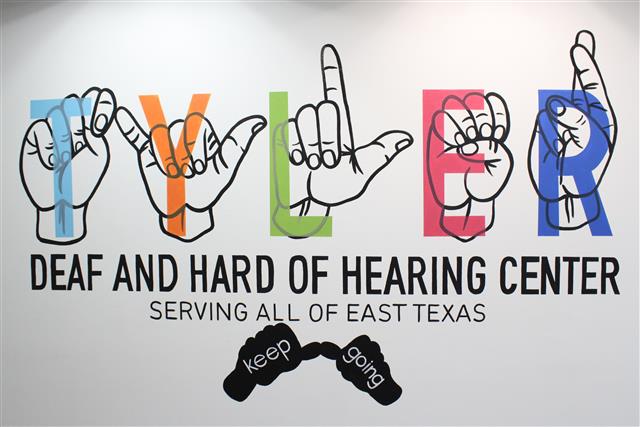
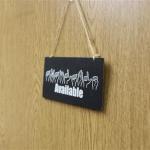
- A mural at the Tyler Deaf and Hard of Hearing Center’s community room uses ASL fingerspelling to welcome visitors.
-
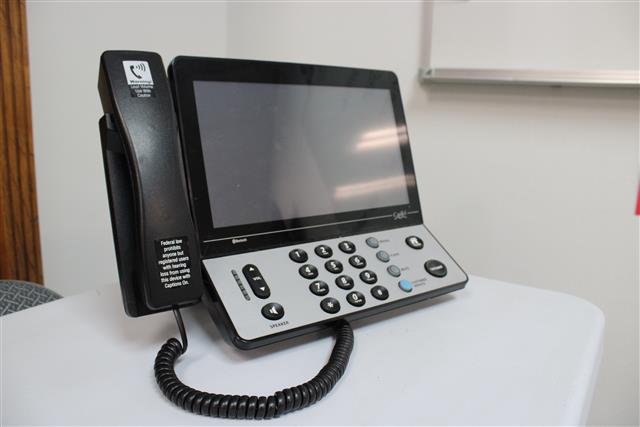
- Assistive technology like captioned telephones help individuals with hearing loss maintain independence by providing real-time text of phone conversations.
-
- ASL is a vibrant, visual language where facial expressions and body movements are essential for co
-
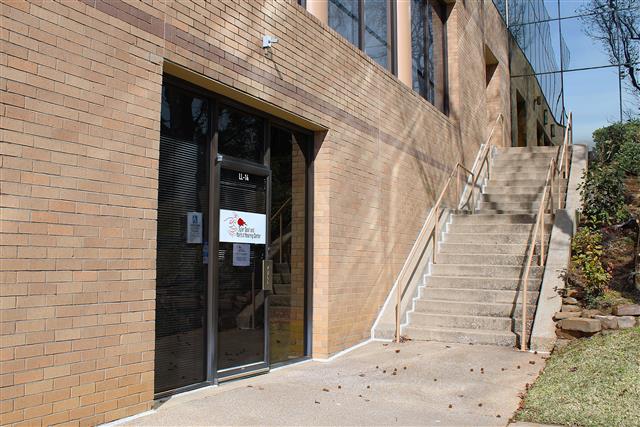
- The entrance to the Tyler Deaf and Hard of Hearing Center, located at 1828 ESE Loop 323, Suite LL-14 in Tyler.
-
- Andrea Short, interpreter coordinator for the Tyler Deaf and Hard of Hearing Center, uses American Sign Language (ASL) to communicate during a Lindale Deaf Chat event in January.
-
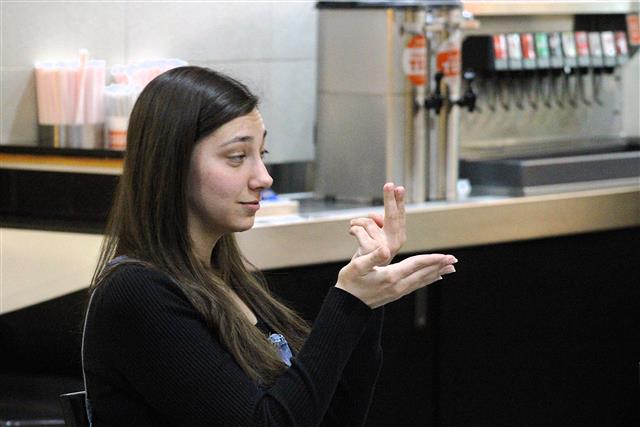
- Community members use American Sign Language (ASL) during a Lindale Deaf Chat in January.
-
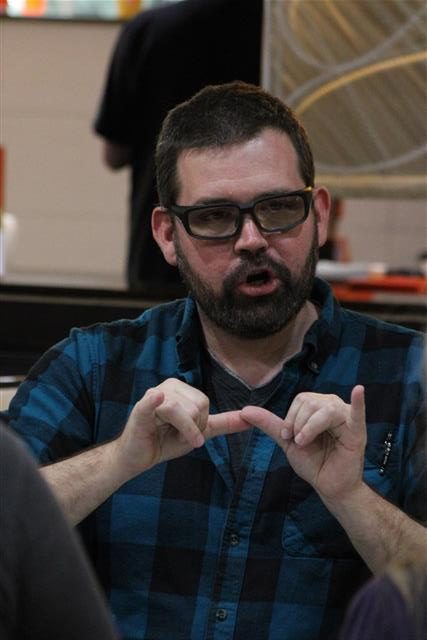
- Community members use American Sign Language (ASL) during a Lindale Deaf Chat in January.
-
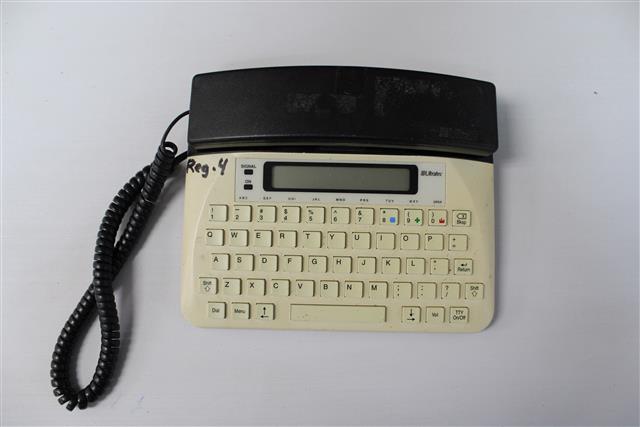
- Traditional telecommunications devices for the deaf (TTY) utilize a keyboard and small display screen to allow individuals to communicate over phone lines via text.
-
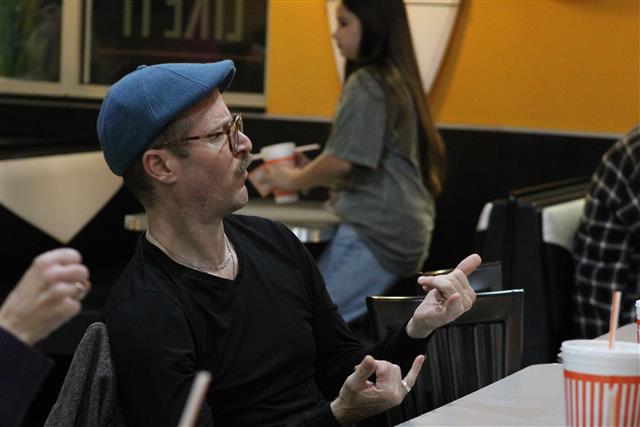
- Members of the East Texas deaf and hard of hearing community gathered in Lindale in January for the monthly Deaf Chat event.
-
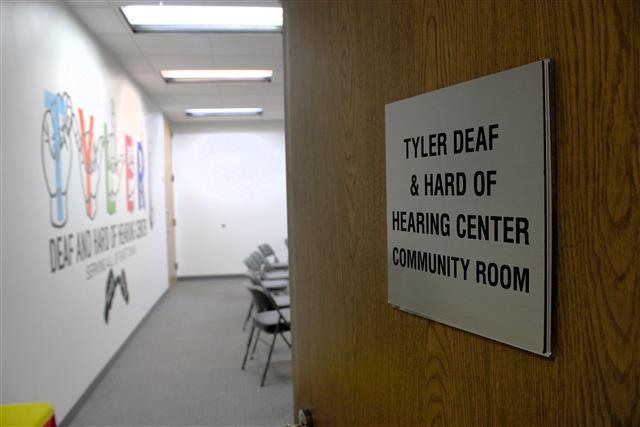
- The Tyler Deaf and Hard of Hearing Center is a nonprofit organization that was established by members of the local Deaf community who recognized the need for a dedicated space where services and culture could exist under one roof.
-
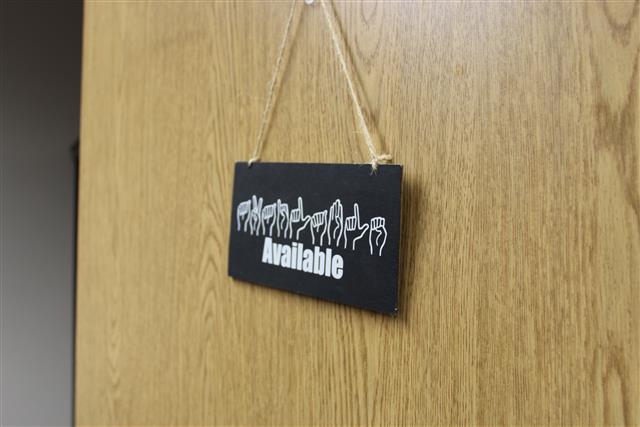
- Members of the local Deaf community established the Tyler Deaf and Hard of Hearing Center (TDHHC) in 2012 to serve as a centralized hub for advocacy, connection, and essential services.
-
- Independence for the Deaf and hard of hearing community is often supported by specialized technology, such as mobile devices with full keyboards that facilitate easier text-based communication. (Jennifer Scott/ETX View)
-
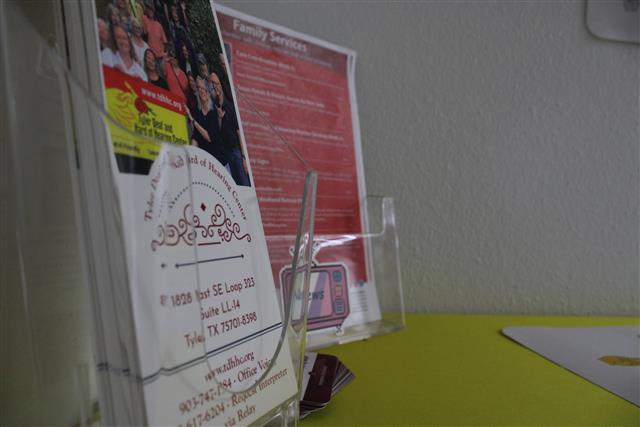
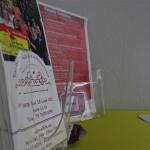
- Informational brochures at the TDHHC detail available resources such as ASL classes and senior programs. The center operates as a “deaf-friendly one-stop shop” from its regional hub on E SE Loop 323 in Tyler.
About Jennifer Scott
Multimedia reporter and animal lover on the education beat. I am an Alabama native with a bachelor's in journalism from Troy University. I've been married to my college sweetheart since 2012, and we have enjoyed living in East Texas since moving up from the Houston area in 2021. We love all things Disney and dogs!
Please send me story ideas or questions to jennifer.scott@tylerpaper.com.
 More by Jennifer