UT Health Tyler dietitian weighs in on new federal food pyramid and guidelines
Published 6:00 am Wednesday, January 28, 2026
“Eat real food,” is the theme of the new federal dietary guidelines for 2025 to 2030, prioritizing protein at every meal and full-fat dairy with no added sugar. Jayden J. Chapman, registered dietitian from UT Health Tyler Bariatric Center, recently sat down with the Tyler Morning Telegraph to give insight into the new guidelines in practice.
“I think the first thing I noticed was that a lot hasn’t changed, as far as the focus on eating real foods,” Chapman said. “I did like the emphasis on increasing protein, because I think that recommendation has been too low for a while, so it’s nice seeing that come up.”
U.S. Department of Health and Human Services Secretary Robert F. Kennedy, Jr. and U.S. Department of Agriculture Secretary Brooke Rollins on Jan. 7 released “Dietary Guidelines For Americans,” which emphasize eating more protein, dairy, vegetables, fruits, healthy fats and whole grains by flipping the pyramid upside down to visualize what should be consumed in larger quantities at the top than items lower on the pyramid. Chapman said the guidelines are helpful for an average person, but said the roots of America’s dietary issues remain unsolved.
“These guidelines return us to the basics,” Kennedy said in the HHS’s press release. “American households must prioritize whole, nutrient-dense foods … and dramatically reduce highly processed foods. This is how we make America healthy again.”
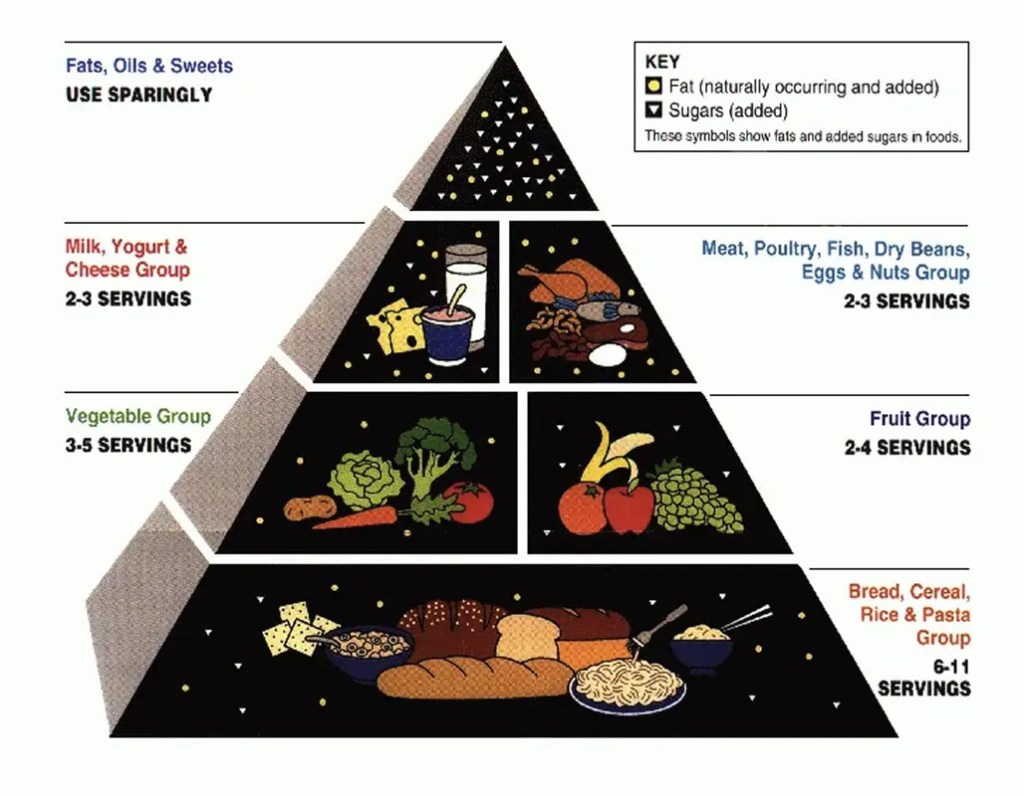
The old pyramid had fats, oils and sweets at the top in very small quantities and then expanded downwards with larger tiers that included milk, yogurt, cheese and protein, then fruits and vegetables, and then in the largest category with bread, cereal, rice and pasta groups, but had similar written guidelines as the new one.
Chapman said the recommendation to increase overall protein that’s inside the written guidelines are in line with current research and that the guidelines not only focus on whole fats, but incorporating different types of healthy fat into the diet, such as fish, avocados, nuts and seeds.
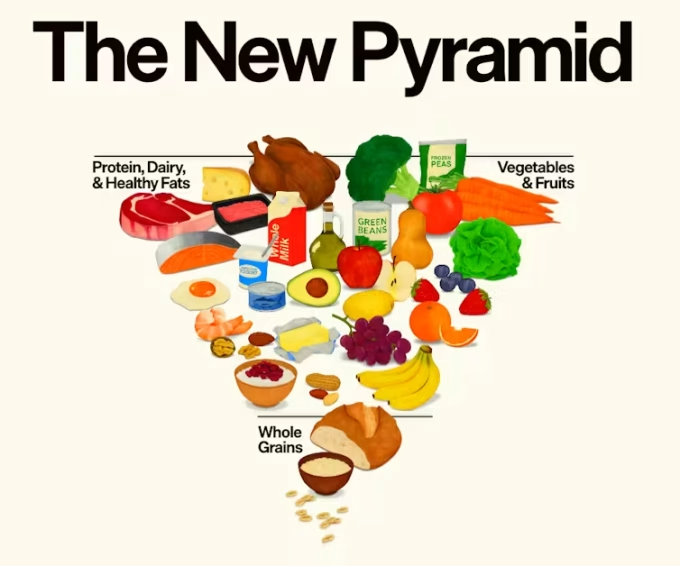
U.S. Department of Health and Human Services Secretary Robert F. Kennedy, Jr. and U.S. Department of Agriculture Secretary Brooke Rollins released the new dietary guidelines on Jan. 7 which emphasize eating more protein, dairy, vegetables, fruits, healthy fats and whole grains by flipping the pyramid upside down to visualize what should be consumed in larger quantities at the top than items lower on the pyramid. (Contributed Photograph)
“As far as types of fat in the diet and their impact on health, there’s studies kind of showing different things,” Chapman said. “In some studies they’ll see an improvement in health with higher fat or higher amounts of saturated fat versus unsaturated fats, but really, even in this one, it does recommend limiting saturated fat to less than 10%, so it’s still limited.”
The guidelines also highly emphasize eating whole grains versus refined grains, which Chapman said adds fiber back into the diet.
“Whole grains are actually the entire grain where nothing has been stripped away from it, so it would be your whole wheat bread or oatmeal,” Chapman said. “Versus refined grains, which have had their outer part of the grain kind of stripped away, where a lot of the fiber and vitamins are naturally in. They add it back in, but it’s been fortified and has lower fiber.”
Chapman said most schools are required to meet the dietary guidelines and it will definitely have an impact on the types of foods they offer and how staff put meals together for students.
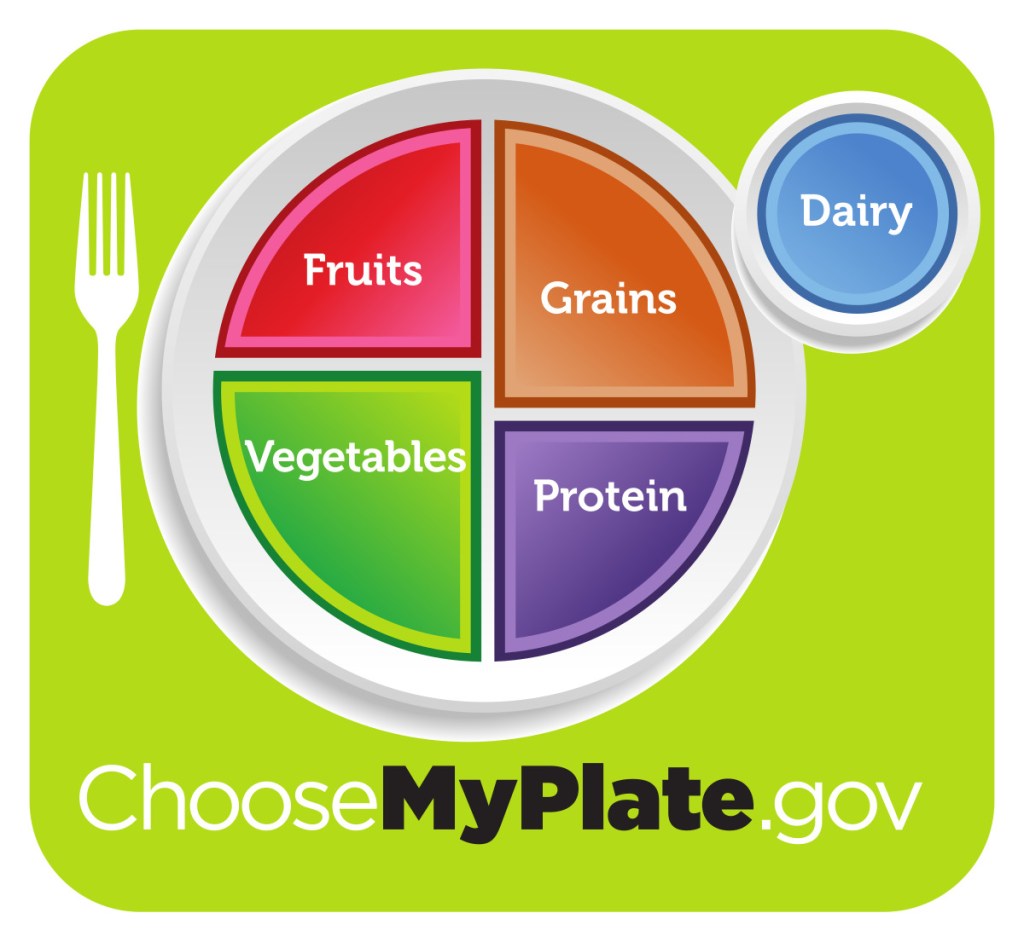
“Along with that, they will also be using the visual part, which is what people are going to see first,” Chapman said. “That inverted pyramid, I think, is visually not quite as helpful as the ‘My Plate’ graphic which teaches you how to put a meal together, but it does give you an idea of what kinds of foods to emphasize.”
Chapman said he wishes the inverted pyramid would have been more specific on what types of protein were at the top versus lower down on the list, since there are healthier proteins than others. He added that people need to remember the guidelines are for an average person and not individuals with specific health conditions and dietary needs.
“I, as a clinical dietitian, am working with people who have more specific health concerns, so these are general guidelines geared toward healthy people trying to prevent a chronic condition, whereas if somebody already has some type of illness, they’re going to have more specific nutritional needs,” Chapman said. “That’s where you want to get involved with the healthcare system, whether that’s seeing what information your doctor may be able to give you or if they could refer you to a dietitian.”
Chapman said one of the largest culprits to America’s poor health boils down to whole food access and food deserts, which are geographical areas, typically low-income, where individuals do not have access to grocery stores and healthy food options.
“It’s a huge problem,” Chapman said. “Providing people with knowledge of the types of food that might be the best for your health doesn’t solve the problem of having access to it, so that’s where other policy changes will be able to have a bigger impact than just guidelines or looking at a pyramid.”
Nearly 90% of health care spending goes toward treating chronic disease, with many linked to diet and lifestyle and more than 70% of American adults are overweight or obese with nearly 1 in 3 adolescents with pre-diabetes, according to the Centers for Disease Control and Prevention.
“I see people from really all over East Texas and whether it’s because of where they live or income level, it can be more difficult for some people to have access to healthy foods that they would like to include in their diets,” Chapman said.
Chapman recommends individuals to read the guidelines, instead of only looking at the pyramid, to better educate themselves to make healthier choices if they can and to pay attention to serving sizes.
“There’s a lot of good information on there as far as the types of foods and some general advice on the number of servings to include of those different food groups,” Chapman said. “But my overall advice is just making sure you do have that good source of protein in each of your meals based throughout the day and trying to include as much of those fruits and vegetables that you can focusing on whole grain, so it’s not a lot different than what’s written in the guidelines.”
To read the full Dietary Guidelines For Americans visit, https://cdn.realfood.gov/DGA.pdf.
For the Dietary Guidelines For Americans website visit, https://realfood.gov/.
About Leeza Meyer

New multimedia reporter at the Tyler Morning Telegraph. After graduating from UT Austin with my bachelor's degree in journalism, I found myself packing up and heading North East to the pine trees and roses. I love telling community stories and I am currently covering local politics. Raised in Texas, I understand the value of connected and informed communities and I'm excited to be here. Story ideas, questions, ect. are welcome at leeza.meyer@tylerpaper.com
 More by